
The first judgment a recipient makes about your letter happens before a single word is read. It happens in the fingertips: the envelope, the stock, the weight. Light paper says mass mailing. Heavy paper says somebody meant this.
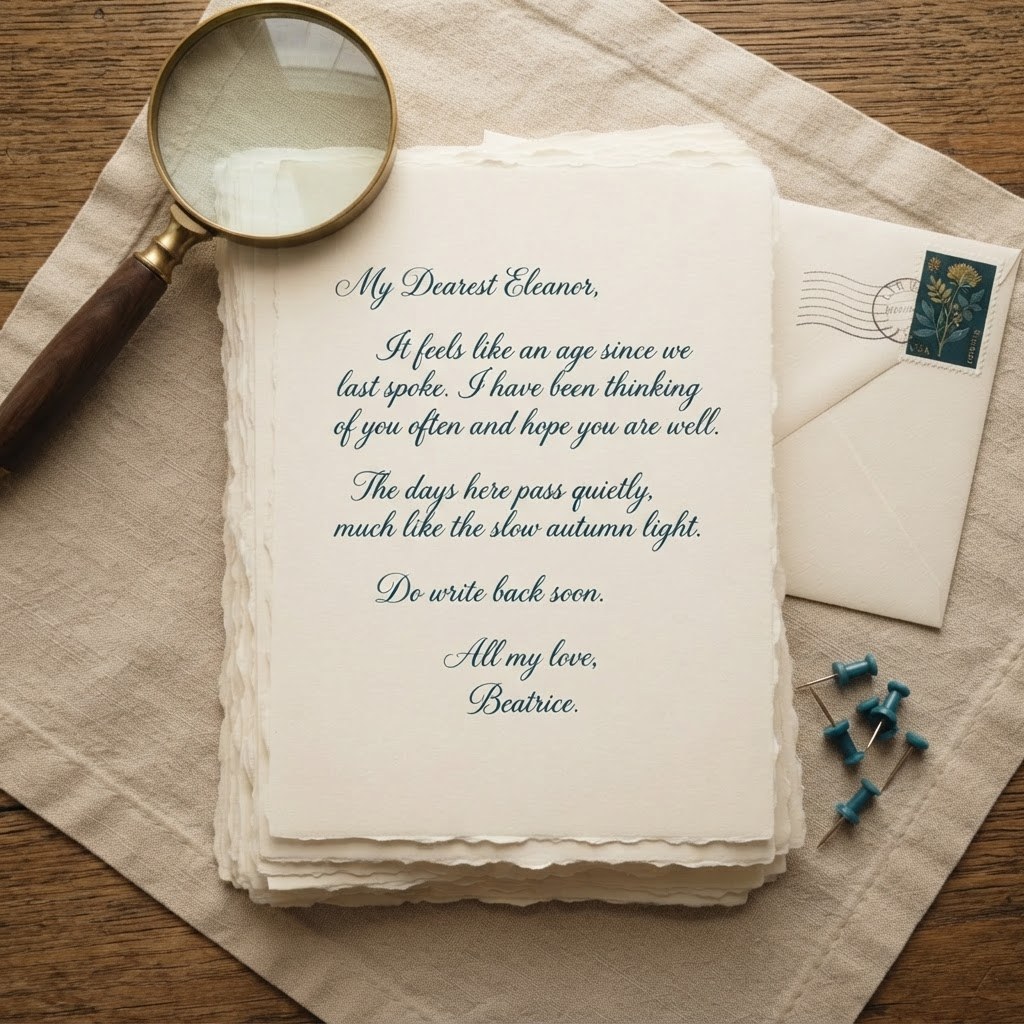
Every Real Ink letter is written on 190 GSM paper — white, just off-white — heavy enough to feel like an occasion, and never glossy. When a real ballpoint pen presses into stock this substantial, the ink soaks in and the tip leaves faint grooves. The letter doesn’t just say it’s real; you can feel that it is.
Why 190 GSM is the sweet spot
Why 190 GSM specifically? It’s the sweet spot. Flimsy printer paper feels like a flyer the moment it’s picked up, and a stiff card can feel like a coupon. A heavy folded note feels like something worth keeping — because for most of the last century, that’s exactly what this format was used for.
The half-letter format
That format is the half-letter. Each letter starts as an 8.5 × 11 sheet, cut in half to 8.5 × 5.5 and folded into a classic announcement-size envelope — the format of wedding invitations, birth announcements, and graduation cards. It’s a size people have opened first their whole lives, and it still commands that reflex: a hand-addressed announcement envelope in a stack of bills and flyers gets opened, not binned. That reflex is a big part of why our letters see open rates as high as 98%.
None of it works halfway. The heavy stock needs the handwritten address, the handwritten return address, and the real First-Class stamp to complete the impression — one machine-stamped label can undo the whole effect. We keep every element consistent, because the recipient judges the whole in one glance.
Materials aren’t a detail of a handwritten letter campaign. They’re the message before the message. Order your letters →