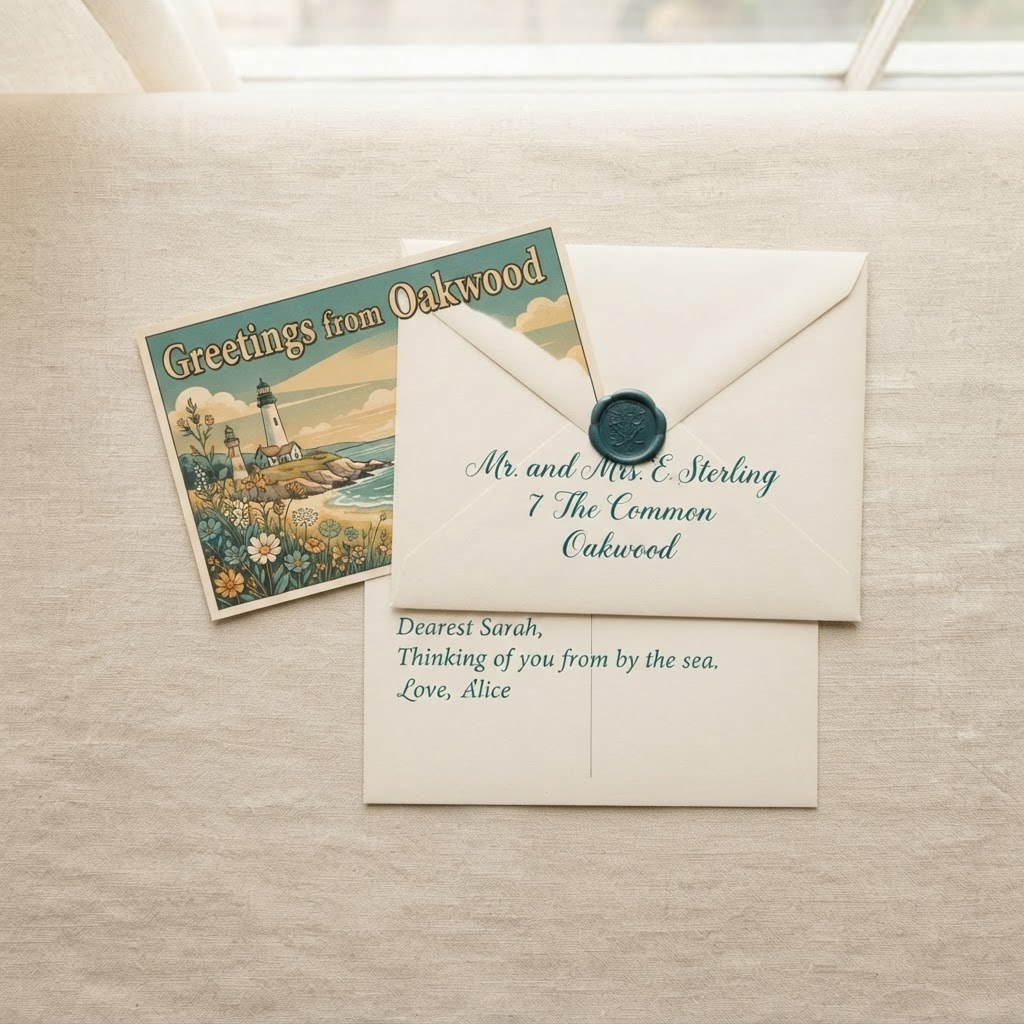
When weighing letters vs postcards for your next direct mail campaign, brevity looks tempting. A postcard shows its message immediately without requiring the recipient to open an envelope. Printing is inexpensive, and postage costs a few cents less per piece. On paper, it looks like a lean, efficient marketing decision.
In practice, that exposed message is often a postcard’s downfall. Because anyone can read it at a glance, anyone can also identify it as marketing material in less than a second. It gets sorted directly over the recycling bin alongside grocery coupons and credit card flyers. The prospect never reads your copy because they never chose to engage with it in the first place.
A genuine letter inside a sealed cream envelope changes the psychological dynamic entirely. Nobody throws away a hand-addressed envelope without opening it first. In fact, 98% of handwritten letters get opened because curiosity demands to know who took the time to write. Privacy creates respect, and that respect gives your message time to work.
Why Does an Envelope Change the Prospect’s Behavior?
When you receive mail, your brain makes split-second decisions. Window envelopes mean bills or tax forms. Oversized glossy postcards mean unsolicited sales pitches. A clean cream envelope with hand-addressed ballpoint ink and a real postage stamp breaks the pattern. It looks like personal correspondence from a colleague, neighbor, or professional peer.
Privacy also protects the conversation you want to start. A business owner or homeowner reading a private letter feels addressed directly. They can read a detailed explanation of your offer without feeling broadcasted to. That private moment creates space for real consideration, whether you are reaching out to prospective clients or re-engaging past contacts.
Furthermore, a letter gives you enough room to tell a complete story. A postcard forces you to condense your offer into bullet points and oversized headlines. A letter lets you explain who you are, why you are writing, and what specific step the reader should take next.
When Do Postcards Make Sense and When Do They Fail?
Postcards perform well for quick reminders to existing customers who already know your brand. A dental office sending a simple card to remind a patient of an upcoming cleaning works because trust is already established. The recipient recognizes the logo and appreciates the brief nudge.
However, postcards consistently fail when attempting cold outreach or high-value prospect acquisition. When you need to establish credibility with a stranger, an exposed sales flyer communicates low effort. If your service carries a high transaction value—like real estate listings, commercial insurance, or financial advisory—a cheap postcard undermines your positioning before the prospect reads a single word.
Choosing between letters vs postcards comes down to recipient sentiment. If you want prospects to feel valued, a hand-folded letter written in blue ballpoint ink demonstrates genuine effort. You can read more about how our real ink process works on our how it works page.
How Do Response Rates Compare in Practice?
Direct mail response rates depend heavily on whether the mail piece gets opened and read. While standard postcards average response rates well below one percent, genuine letters regularly achieve four to six times higher engagement. The initial 98% open rate ensures your copy actually reaches the reader’s eyes.
Consider how this impacts campaign economics. If you mail 500 postcards, 400 might be tossed unread before reaching the desk. If you mail 500 handwritten letters, nearly 490 will be opened and examined. The higher initial open rate means your cost per response is frequently lower with letters, despite the higher unit cost.
For example, a real estate agent targeting a selective neighborhood might send letters to 100 property owners. You can see tailored approaches on our real estate industry page. Because each owner opens and reads the note, a small batch generates meaningful inquiries that postcards simply cannot replicate.
- Privacy and respect: Sealed envelopes keep your business offer confidential and personal.
- High curiosity factor: Hand-addressed envelopes achieve a 98% open rate across all industries.
- Ample writing space: Full page layouts let you articulate complex value propositions clearly.
- Perceived value: Real ballpoint ink on quality paper signals professional authority and care.
Ultimately, a postcard asks for attention while a letter earns it. When your goal is building trust and securing high-value conversations, privacy beats brevity every time. Ready to launch your first high-converting campaign? Visit our Real Ink Letters shop to select your letter style and start mailing today.
Leave a Reply